Bitcoin Cash Community Preps Hard Fork Slated for November 13
Over the past few weeks, the discussion regarding fixing the Difficulty Adjustment Algorithm for the Bitcoin Cash network has been a very hot topic. Now according to sources, the protocol’s developers are in the midst of planning a hard fork slated for November 13, 2017.
Several Proposals Developed, Coded, and Tested
 According to Juan Garavaglia of the organization Bitprim.org, bitcoin cash (BCC) developers are currently planning a “smooth hard fork” for November 13. News.Bitcoin.com spoke with Garavaglia briefly about the subject, and he says that developers Amaury Séchet, Tom Harding, and Neil Booth have submitted proposals. Further, Garavaglia is in the midst of testing a variety of “Difficulty Adjustment Algorithms” (DAA). At the moment the current DAA isn’t operating so well for the BCC network.
“The Bitcoin Cash DAA has served its original purpose quite well, but now the side effects are hurting Bitcoin Cash,” explains Garavaglia.
Several proposals have been developed, coded, and tested. There has been a lot of discussion in developer groups. My team is now testing the best proposals, and there is consensus that the Bitcoin Cash network will receive an upgrade .
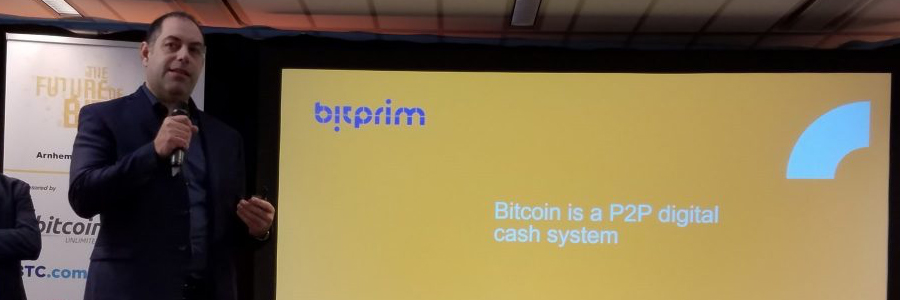 Bitprim.org’s Juan Garavaglia.
Bitcoin ABC’s Next Release
Garavaglia details that the fork discussion has been talked about for quite some time, and the timing doesn’t really have anything to do with the approaching Segwit2x fork. “It was always assumed things would be fixed around this time, but really one thing has little to do with the other,” says Garavaglia.
“Solutions have already been coded and tested — It will be fixed in the next release of Bitcoin ABC, hopefully in the next several days,” Garavaglia adds. “This will allow businesses a few weeks time to upgrade their nodes — At the moment we’re running real nodes and real hashrate on a testnet, using Bitcoin ABC binaries with the modified DAA algo.”
We are removing and adding extreme amounts of hashpower (such as 95%) and then we observe how the difficulty actually adjusts with the new code. In addition, the individual developers of the new algorithms have performed their own simulations and there are comparisons being run for different scenarios.
‘Everything Does Much Better Than the Current Bitcoin Cash DAA’
Forum discussions across the BCC community seem to favor the DAA upgrade announcement. Most BCC proponents were already onboard with fixing the protocol’s difficulty algorithm, as many individuals profusely expressed the DAA fix was a priority. In fact, Garavaglia says all of the current trial algorithms are better than the current version.
“So far, everything does much better than the current DAA, and the “turbo blocks” problem is less severe and corrects faster than before — We’re looking forward to continuing our testing during the next several days which will enable Bitcoin ABC to publish their new software version with increased confidence,” Garavaglia concludes.
What do you think about the Bitcoin Cash network preparing to hard fork on November 13? Let us know your thoughts in the comments below.
Images via Shutterstock, the Future of Bitcoin, and Bitcoincash.org
Do you agree with us that Bitcoin is the best invention since sliced bread? Thought so. That’s why we are building this online universe revolving around anything and everything Bitcoin. We have a forum, a casino, a mining pool, and real-time price statistics.


Will We Really Lose Bitcoin In The SegWit2x Fork?


CoinSutra welcomes you to another Bitcoin hard fork mess!
And when I say “mess”, I mean it more than ever.
In a recently concluded Bitcoin hard fork (i.e Bitcoin Cash), we witnessed the ebbs and flows of being a Bitcoin investor.
And now, again, the Bitcoin ecosystem, including every type of entity connected with it, is being tested because we have another Bitcoin hard fork scheduled for this November.

I know some of you might wonder why this is happening because Bitcoin has already scaled, activated SegWit, and Bitcoin Cash supporters have already parted their ways with bigger block sizes.
So why is this happening.
Well, my answer is simply that the Bitcoin scaling debate is not over yet!
For those of you who have been reading CoinSutra diligently, you will know about the unconcluded story of the New York Agreement.
And now, this unconcluded story is about to reach its climax.
For the newcomers, here’s what happened…
What Is NYA or SegWit2x?
NYA (aka New York Agreement or aka SegWit2x) is a Bitcoin scaling solution that was signed and agreed to by a large number of miners, developers, and investors in Consensus 2017.
SegWit2X is a fancy derivative name given to a combo of scaling solutions (i.e SegWit and 2MB block size increase). It simply means implementing SegWit first, and then within 3 months of SegWit activation, it aims at implementing a 2MB block size for the Bitcoin network.
And since SegWit2x’s first leg (i.e. BIP 91 (SegWit)) was already put in place on July 21, 2017, the last and final leg is still pending.
Why Is This Fork Happening?
Now the present mess is about the implementation of the 2MB block size (which is happening in mid-November 2017).
But as I have described in my Bitcoin Improvement Proposal article, 2MB blocks will be implemented only when core developers and other players support this idea.
But it doesn’t look like many of them will be supporting it, and so we are having yet another hard fork lingering over Bitcoin.
Consider reading these “fork” posts to know the complete history of this event:
When Is This Fork Happening?
This fork is happening on the 18th of November 2017.
The exact time is not known yet, but it is scheduled to go live from block height 494784.
And according to Blockchain.info at the time of this writing, the Bitcoin network is currently sitting at 489179 block height. So you can see that we are only a few thousand blocks away from the SegWit2x hard fork.
From this threshold block height, Bitcoin’s blockchain will be diverging into two different directions with two different rules onto two different blockchains.
Are Your Coin Holdings Doubling?
If this fork happens, then everyone who was holding Bitcoin before the fork will have an equivalent number of these new SegWit2x coins.
Note: This doesn’t mean that your value of coins will double. Those who were present at the Bitcoin Cash hard fork ceremony will surely understand this.
But there is a problem…!
The problem is it is really going to be very tricky and risky to claim our SegWit2x-version bitcoins. This accessibility problem will emerge due to replay attack susceptibility on both chains. (Read in detail about replay attacks.)
Replay Attack Problem
I want to address this problem loud and clear for both those who were present and those who were not present during the Bitcoin Cash fork.
SegWit2x will not have replay protection like Bitcoin Cash had. It will rather have an opt-in replay protection in place.
This is so because the SegWit2x supporters and a SegWit2x developer (Jeff Garzik) have clearly stated that SegWit2x is not an altcoin, and it will be a Bitcoin upgrade.
For the uninitiated, replay protection is a technical update that stops the same transaction from being broadcast on both chains. (Read in detail about replay attacks).
Due to this, SegWit2x is being highly criticized by legacy Bitcoin supporters because it is a kind of open attack on Bitcoin and its users.
What Is This Opt-In Replay Protection And Why Should You Know About It?
Opt-in replay protection is a kind of replay protection that is not inbuilt in SegWit2x’s version of Bitcoin. As a user, you yourself need to opt-in and apply for it.
This was proposed by Jeff Garzik, the developer of SegWit2x. It has been highly criticized because it will put users’ funds at risk.
As a Bitcoin HODLer, you should know about this because if you do a transaction on either of the chains without “opting in”, then your coins on the other chain will be at risk.
Anyone will be able to pick up that transaction and “replay” it onto the other chain, and you will lose those coins.
Check out this must-read piece written by Bitcoin developer Jimmy Song: How Segwit2x Replay Protection Works.
Who Is Supporting SegWit2x?
According to this Medium post, as of May 25, 2017, representing 83.28% of hashing power, SegWit2x had these supporters:
- 1Hash (China)
- Abra (United States)
- ANX (Hong Kong)
- Bitangel.com /Chandler Guo (China)
- BitClub Network (Hong Kong)
- Bitcoin.com (St. Kitts & Nevis)
- Bitex (Argentina)
- bitFlyer (Japan)
- Bitfury (United States)
- Bitmain (China)
- BitPay (United States)
- BitPesa (Kenya)
- BitOasis (United Arab Emirates)
- Bitso (Mexico)
- Bitwala (Germany)
- Bixin.com (China)
- Blockchain (UK)
- Bloq (United States)
- btc.com (China)
- BTCC (China)
- BTC.TOP (China)
- BTER.com (China)
- Circle (United States)
- Civic (United States)
- Coinbase (United States)
- Coins.ph (Philippines)
- CryptoFacilities (UK)
- Decentral (Canada)
- Digital Currency Group (United States)
- F2Pool (China)
- Filament (United States)
- Gavin Andresen (United States)
- Genesis Global Trading (United States)
- Genesis Mining (Hong Kong)
- GoCoin (Isle of Man)
- Grayscale Investments (United States)
- Guy Corem (Israel)
- Jaxx (Canada)
- Korbit (South Korea)
- Luno (Singapore)
- MONI (Finland)
- Netki (United States)
- OB1 (United States)
- Purse (United States)
- Ripio (Argentina)
- Safello (Sweden)
- SFOX (United States)
- ShapeShift (Switzerland)
- surBTC (Chile)
- Unocoin (India)
- Vaultoro (Germany)
- Veem (United States)
- ViaBTC (China)
- Wayniloans (Argentina)
- Xapo (United States)
- Yours (United States)
But as of now, at the time of writing this article (mid-October 2017), we’re not so sure that all of these groups are still supporting it.
- According to segwit.party, 25% of SegWit2x supporters have already withdrawn their support.
- On the other hand, according to Coin Dance, out of 79 Bitcoin companies that they are tracking, 34 companies are in support, 9 are ready, and 36 are in opposition.
Out of these companies, Coinbase and Bitfinex have come out and openly stated that they will be supporting both chains for their users, but also appealed to users to wait until the dust settles.
Let’s also not ignore some notable Bitcoin pundits (like Roger Ver) who claim that SegWit2x will be far more successful in gaining the majority of hash power and are betting millions on its success.
What The Hell About The Bitcoin Gold Fork?
Bitcoin Gold (BTG) is an another hard fork of Bitcoin scheduled for 25th October 2017.
You need not worry as it is unrelated to SegWit2x and has claimed to have replay protection in place.
Also, I have done a separate post on the Bitcoin Gold fork for CoinSutra readers, so just sit tight and follow this guide.
The Conclusion (What You Need To Do)
I want to conclude by stating the same thing that I have stated many times:
- Your Keys = Your Coins; Not Your Keys = Not Your Coins
The same things applies here!
But now that we have this opt-in replay protection thing, here is some other advice to avoid losing your funds:
- Don’t transact for some days after the fork until the dust settles and until one of the parties (SegWit2x or Legacy Bitcoin) puts an auto-replay protection in place.
- If you still want to transact and want to opt-in for replay protection, follow Jimmy Song’s article on How SegWit2x Replay Protection Works.
- Don’t keep your coins on a third party exchange where you don’t control your keys.
- Use hardware wallets like the Ledger Nano S and Trezor to control your coins.
- If you don’t have a hardware wallet, use software wallets like Jaxx or Exodus to control your private keys.
- Don’t fall prey to fake websites/wallets demanding your private keys to let you access your SegWit2x coins.
- And last but not least, do not become affected by the FUD/FOMO because one of the versions after the fork will still be the dominant one…
That’s all from my side in this article. I will be updating this article time and again with the latest developments on SegWit2x, so stay tuned to CoinSutra.
Now its time to hear from you: What do you think about SgWit2x? What will you do with your SegWit2x coins, if you get them? Waiting for your comments!!
Note: Everything that I said above is irrelevant and useless now because the Segwit2X fork now stands cancelled. I have published another post on it where you will learn everything that you should know.[Must Read]: Bitcoin’s Hard Fork SegWit2x Cancelled
It is good that this fork is now called off but this has led a sudden spike in interest of users in Bitcoin Cash (BCH), which was formed in August. It currently trading well above $1000 per unit and it is largely due to Roger Ver’s promotion of Bitcoin Cash on the Bitcoin.com.
He has also several times claimed the Bitcoin Cash is the real Bitcoin that Satoshi Nakamoto wanted to create.
The Bitcoin Cash price is certainly taking off after the Segwit2x collapse and it is quite evident from these memes as well as propaganda by Roger Ver.
But we don’t believe in it yet and want to make the new users aware that Bitcoin is Bitcoin and not to get mislead also Bitcoin is not owned by anyone neither-Roger Ver.
Like this post? Share it with your friends!
Here are hand-picked articles for you to read next:
Block 494,784: Segwit2x Developers Set Date for Bitcoin Hard Fork
The developers behind Segwit2x, a controversial plan to increase the transaction capacity of the bitcoin blockchain, plan to announce a firm date for a hard fork today.
A copy of a forthcoming blog post obtained by CoinDesk indicates that the Segwit2x team plans to enable bitcoin's miners to elect to run new software at block 494,784 on the blockchain, a block they expect will occur sometime in November of this year.
The announcement, while not yet public, is expected to be released formally later today. Entitled, "Bitcoin Upgrade at Block 494,784," the draft post is currently live on a website related to the project.
"During the month of November 2017, approximately 90 days after the activation of Segregated Witnesses in the Bitcoin blockchain, a block between 1MB and 2MB in size will be generated by bitcoin miners in a move to increase network capacity. At this point it is expected that more than 90% of the computational capacity that secures the bitcoin network will carry on mining on top of this large block."
If enacted, Segwit2x could enable a second hard fork of the bitcoin network in 2017, one that could also result in the creation of yet another version of the bitcoin blockchain with its own unique cryptocurrency.
Bitcoin Cash, created through a hard fork on August 1, is currently trading at just over $300.
Announced in May, Segwit2x is an agreement supported by more than 50 industry startups, miners and technologists and organized by industry investor Digital Currency Group. To date, its developer team has drawn support mainly from industry startups.
Still with a portion of bitcoin's mining network backing the new bitcoin cash blockchain, it remains to be seen just how many miners on either chain would dedicate computing power to yet another blockchain.
For one, there is already a live version of the blockchain that supports larger blocks. Secondly, with the adoption of SegWit on the bitcoin blockchain, its proponents argue block size is no longer an effective metric for capacity.
Disclaimer: CoinDesk is a subsidiary of Digital Currency Group, which helped organized the Segwit2x agreement.
The leader in blockchain news, CoinDesk is a media outlet that strives for the highest journalistic standards and abides by a strict set of editorial policies. CoinDesk is an independent operating subsidiary of Digital Currency Group, which invests in cryptocurrencies and blockchain startups.
The November 2017 Bitcoin Hard Fork is Huge, But Not Universally Welcomed


- More on Blockchain and Bitcoin
What's the Vice Industry Token—A Crypto for Porn?
 Blockchain-as-a-Service (BaaS)
Mark your calendars (in pencil, as this date may change): November 13, 2017. The mother of all hard forks will finally trigger, which will split Bitcoin into two tokens.
Even before cryptocurrencies took off like crazy at the beginning of 2017, different bitcoin developers, miners, and investors were already squaring off to debate the best ways to continue to develop the leading cryptocurrency. (See more: The War Between Segwit vs. BIP148 vs. Bitcoin Unlimited.) One of the biggest questions they faced was how to increase the number of transactions that the blockchain (the technology which supports bitcoin and all other cryptocurrencies) can process per second.
Bitcoin has grown at an astonishing rate, and the interest among investors has largely overloaded the system as it was initially set up. Other cryptocurrencies have found new ways of increasing their transaction capacity. Will bitcoin be able to do the same? It seems that if bitcoin is to grow in this way, it may need to experience a fork in November.
SegWit2x Hard Fork
The process of “hard forking” entails bitcoin being divided into two separate currencies. A hard fork, which may happen around November 13, would happen when the so-called SegWit2x protocol is adopted. According to a report by Forbes, bitcoin protocol developer Matt Corallo explained that the decision to adopt the new protocol (and, therefore, to hard fork the cryptocurrency) was not a discussion at all. In fact, Corallo says the decision to hard fork “was pretty much a declaration,” and this process is “fundamentally incompatible with the process that is bitcoin core.”
What does a bitcoin hard fork mean for the average investor? To begin with, some exchanges are offering what they call chain split tokens. These function as futures markets, of a sort, in which users and investors can take sides about the hard fork. According to Forbes, activity in this area reveals that the “vast majority of community support is against the hard fork.” In fact, across a number of exchanges, the split tokens are trading at about 15% of the current value of bitcoin.
Too Late to Turn Around?
There is some indication that it is too late to stop the hard fork process, even in spite of community opposition. The first part of the plan activated in August, setting the process in motion. (See more: Bitcoin Cash Set To Undergo Hard Fork.)
It’s also possible to view the chain split token activity in a different light. Because the volume in this area is just $2 million per day, it may not be as representative of community perspective as some analysts have suggested.
Bitcoin miners may be more inclined to support the split, with 75% supporting the protocol adoption since last July. Corallo dismissed the notion that miners would end up attacking the minority chain in the event of a split, saying that “you have to take 15% of the hash power globally that you have and attack this chain instead of mining something useful, and if your attack works, all this money you spent on mining these blocks is useless.”
Bitcoin hard fork november


It’s Happening: Bitcoin Cash Is Set to Hard Fork on November 13
October 21, 2017 by Evan Faggart 153 Comments 42721 Views

Come November 13, 2017 Bitcoin Cash will hard fork to make a few performance adjustments to the BCC protocol. Bitprim’s Juan Garavaglia has announced that, in preparation for the coming hardfork, he is running tests on different adjustment algorithms for mining difficulty.
Why Is Bitcoin Cash Doing a Hard Fork?
Unlike the previous Bitcoin hard fork that resulted in the creation of BCC, Garavaglia assures that this fork has support and is only meant to upgrade the protocol.
A large issue with the original protocol came from the “Difficulty Adjustment Algorithm,” or DAA. This algorithm, said Garavaglia, allows difficulty to adjust faster than every 2016 blocks if miners have issues finding blocks in a timely manner.
“The original intention was to allow Bitcoin Cash to survive as a minority chain by avoiding a frozen chain situation where the blocks get too slow,” Garavaglia told Bitsonline.
But now, the side effects of the DAA are outweighing its benefits. Due to the tendency to drop mining difficulty sharply, which brings a large influx of miners looking for profit, thereby increasing difficulty just as rapidly as it fell.
Explaining the problem to Bitsonline, Garavaglia said:
“So we have this situation of extremes where blocks are being mined every minute, or every few hours. This is not what users want. Also, Bitcoin Cash is now thousands of blocks ahead of Bitcoin and it is screwing up the coin issuance schedule.”
Therefore, Garavaglia and the Bitcoin ABC team are searching for a replacement to the current DAA. Some of the proposals being tested by the ABC developers have come from the likes of Amaury Sechet, Neil Booth and Tom Harding.
A single algorithm has not been selected yet, but Garavaglia said the ongoing, intense testing will produce a result that can be implemented successfully on November 13.
Community Reception
Instead of trying to force miners to adopt a solution, Garavaglia noted that the Bitcoin ABC developers — the team working on Bitcoin Cash — are in contact with miners and exchanges to ensure a smooth fork.
Additionally, the community itself seems to have consensus around the need for a change to the DAA. And no, Garavaglia assured, this fork has nothing to do with the upcoming SegWit2X fork.
“This hard fork has been planned for a while,” he said, “we could wait longer, but the DAA has become a pressing issue. We need to fix it and soon.”
Garavaglia added that the ABC team had discussed waiting until after the SegWit2X fork to avoid controversy, but that “the problem needed to be fixed immediately.”
“It was always assumed things would be fixed around this time, but really one thing has little to do with the other.”
Bitsonline will continue following this story and provide updates as they become available.
What do you think about this hard fork announcement? Share your thoughts in the comments below.
Images via Order of Malta Worldwide Relief, The CryptoStache
Bitcoin Cash Developers Propose Date for November Hard Fork
The open-source developers behind bitcoin cash appear to be sticking to their word.
Following a pledge in August to change the code as necessary to stay competitive, the developers behind the alternative bitcoin software took a step toward following through this week. In a post yesterday, developers behind one of the bitcoin cash clients revealed they will seek to change the software's rules via a hard fork on Nov. 1.
To be activated on Nov. 13, the new software will seek to adjust rules set in the initial split with the bitcoin blockchain, one that also hints at larger criticisms about bitcoin cash's economic network. In particular, the change will attempt to reverse a piece of code, called the emergency difficulty adjustment (EDA) rule, meant to help bitcoin cash better attract miners willing to secure its blockchain.
As bitcoin and bitcoin cash both use the same mining algorithm, miners operating compatible hardware have shown a willingness to switch between the networks. As such, the idea behind EDA was that mining difficulty could be dynamically adjusted down as necessary to attract miners with profits.
However, while beneficial after the launch, developers believe the rule has outlived its utility to the network.
"This is problematic [now] because it prevents consistently fast confirmations for users, and radically shifts the coin issuance schedule," the post reads.
In its place, a new algorithm would adjust every 600 seconds, based on the amount of computing power that was provided to the network over the previous 144 blocks. The idea is that difficulty would be adjusted quickly, in response to real-time miner activity.
According to the post, members of the development team are now in touch with exchanges, wallets and miners in an attempt to raise awareness for the proposal.
Fork image via Shutterstock
The leader in blockchain news, CoinDesk is a media outlet that strives for the highest journalistic standards and abides by a strict set of editorial policies. CoinDesk is an independent operating subsidiary of Digital Currency Group, which invests in cryptocurrencies and blockchain startups.
One more step
Please complete the security check to access bitcoinexchangeguide.com
Why do I have to complete a CAPTCHA?
Completing the CAPTCHA proves you are a human and gives you temporary access to the web property.
What can I do to prevent this in the future?
If you are on a personal connection, like at home, you can run an anti-virus scan on your device to make sure it is not infected with malware.
If you are at an office or shared network, you can ask the network administrator to run a scan across the network looking for misconfigured or infected devices.
Cloudflare Ray ID: 422b7fd847968f33 • Your IP : 185.87.51.142 • Performance & security by Cloudflare
2x or NO2X: Why Some Want to Hard Fork Bitcoin — and Why Others Do Not
Aaron van Wirdum
A group of Bitcoin companies plans to deploy a hard fork to double Bitcoin’s block weight limit to eight megabytes this November. Known as “SegWit2x,” this incompatible protocol change follows from the New York Agreement (NYA) and is embedded in the BTC1 software client.
SegWit2x is highly controversial. Most of Bitcoin’s development community , a number of other companies , some mining pools and — if public polls and futures markets are representative — a majority of users and the market are not on board with this hard fork. Some of them are even engaged in a sort of protest movement, under the banner “ NO2X .”
For those who have not kept up with the debate, here’s an overview of the main arguments for and against the 2x hard fork part of SegWit2x.
Author’s note: Of course, not all proponents of SegWit2x agree with all of the arguments in favor of the hard fork, and not all opponents agree with all of the arguments against it. This is just a general (and probably incomplete) overview of the various arguments out there.
Bitcoin Software Wars: Discussions Heat Up as November Hard Fork Approaches
September is almost over, and the Segwit2x plan to hard fork the network’s block size to 2MB is approaching quickly. Because time is running out the topic is once again heating up, as some New York Agreement (NYA) signatories have removed themselves from the list, with arguments between users and industry members continuing to escalate.
Latin American Bitcoin Peer-to-Peer Loan Platform Wayniloans Leaves the New York Agreement
 News.Bitcoin.com recently reported on the mining organization F2 Pool announcing its intention to stop supporting Segwit2x’s hard fork this coming November. On September 19 the bitcoin peer-to-peer lending platform, Wayniloans says the business is also walking away from the NYA compromise. The company’s co-founder, Juan Salviolo revealed the announcement via the Segwit2x development mailing list.
“On Wayniloans part or our business is achieved thanks to bitcoin, and in May we agreed to a sentence to reach consensus for the good of the ecosystem,” explains Salviolo. “This sentence was later changed to a longer agreement without our notice, and it was known as the New York Agreement (NYA). At the time we didn’t know that existing developers wouldn’t support it, or that most Latin American bitcoin users, our customers, would view it as a contentious proposal.”
Also, without mandatory replay protection (not opt-in) on Segwit2x, we wouldn’t be able to operate the crypto part of our business without the risk of missing funds or legal actions.
Erik Voorhees: “The Segwit2x Upgrade Will Have Consensus”
Replay protection has been a contentious subject concerning the development of Segwit2x and has caused numerous arguments. R eplay attack protection ensures a malicious actor cannot replay the transaction on one chain and fraudulently claim coins on the other chain. Just recently, a post on r/bitcoin has revealed a bitcoin user who was upset with Erik Voorhees for “not honoring his commitment, to ensure all hard forks are safe by adding replay protection.”
According to the author, Voorhees blocked him on Twitter, however, the Shapeshift founder disagrees with his perspective. Voorhees says he understands that a lot of r/bitcoin subscribers do not like Segwit2x, but a great majority of businesses and miners do support the plan.
“If the hashpower and the biggest wallet providers stay the course, as they have indicated, then the hardfork in November will have overwhelming support,” Voorhees details . “Unless you want to say “consensus” means “universal agreement,” this Segwit2x upgrade will have consensus. (And nothing has “universal agreement” except the blockchain itself… because of the miners).”
Several thousand angry /r/bitcoin subscribers do not dictate bitcoin, but this sub has become such an echo-chamber, such a den of group-think that those here have utterly convinced themselves they represent “the community” — There are many pieces of the community, and a huge portion is proceeding with the Segwit2x upgrade.
Jeff Garzik: ‘The Plan Remains the Same’
The Segwit2x plan for November is still happening as the working group’s lead developer, Jeff Garzik, revealed on September 18, “The plan remains the same.” According to statistics from Coin Dance, Segwit2x support is still 93 percent, at the time of writing, as far as hash power is concerned. So far only a couple of businesses like Bitwala and Wayniloans have backed away from the Segwit2x agreement, and F2 Pool’s blocks still say ‘NYA’ in the mining pool’s coinbase data .
What do you think about the prospects of the Segwit2x hard fork happening this November? Let us know in the comments below.
Images via Shutterstock, Pixabay, and Wayniloans Twitter account.
Bitcoin Games is a provably fair gaming site with 99% or better expected returns. Try it out here .
The Bitcoin Gold Hard Fork Explained (Coming October 25)
Last updated on January 2nd, 2018 at 12:00 am
Bitcoin Gold (BTG/Bgold) is an upcoming hard fork of the Bitcoin blockchain that’s scheduled to occur on October 25 . Bgold has nothing to do with the yellow metal, so it shouldn’t be confused with BitGold, the gold investment and payments firm. Bgold is equally unrelatedf to both the previous hard fork, Bitcoin Cash (BCH/Bcash), which occurred on August 1 , and the upcoming SegWit2x (S2X/Bizcoin) hard fork, which is scheduled for mid-November.
Why Bitcoin Gold?
Bitcoin Gold will alter Bitcoin’s proof-of-work algorithm from SHA-256, which is currently dominated mostly by Chinese ASIC miners, to the Equihash algorithm . Equihash is also employed by the zCash (Classic), Zencash, and Hush cryptocurrencies. Equihash is mostly mined by graphics cards (GPUs).
According to the Bgold pitch, returning Bitcoin mining to home users will bring forth greater decentralization. However, massive Russian and Japanese Bitcoin mining operations have been planned for 2018, so it seems that Bitcoin’s mining centralization problem is slowly resolving itself.
The man behind Bgold, Jack Liao, is also the CEO of LightningASIC , a Hong Kong–based company that mines mostly Litecoin and produces cryptocurrency hardware. It’s surely no coincidence that LightningASIC produces a multi-GPU mining unit, of which it currently holds 913 units in stock. Should Bgold succeed in taking market share away from Bitcoin, LightningASIC would benefit greatly from both mining the new altcoin and selling miners for it.
Because the Bcash and Segwit2x forks are just as transparently motivated by financial self-interest, it’s hard to single out LightningASIC for its actions. Were Bitcoiners not compensated with free altcoins by these spin-off forks, the confusion and disruption they caused would be intolerable.
How to Safely Claim Bitcoin Gold
Any bitcoins (BTC) held in your Bitcoin wallet at the time the fork occurs will grant you an equal amount of BTG. This applies only if you have access to the private keys of your wallet, so no exchange wallets apply.
Although the fork will occur on October 25 , exchanges are likely to only open Bgold for trading one week later on November 1. This allows time for technical issues to be resolved by all participants.
Right now, no clear instructions are available for how to split your BTC from your BTG. Exchanges and software/hardware wallets are still deciding on whether they’ll support this fork.
If you participated in the Bitcoin Cash split, the procedure will be similar—though likely smoother, as exchanges and wallets have had practice and more preparation time. As always, the most important thing to do is safeguard your Bitcoin private keys , as BTC’s value is far higher than BTG’s.
Warning: Beware of scammers who promise to give you BTG early if you share your Bitcoin private key with them. At least one such scam site is currently in operation. Sharing the private key of your Bitcoin wallet is sharing full control of any and all bitcoins therein. Beware!
Bitcoin Gold: Hold or Sell?
When guessing at the future price of Bgold, the closest example to follow is Bcash. It’s reasonable to expect Bgold to see a far lower launch price than Bcash achieved. Bgold enjoys far less support from miners, companies, and what might be termed the “anti-Core community.”
My personal expectation is that Bgold will initially trade at
10% of Bitcoin’s value at most, probably closer to 5%. I expect high volatility on November 1 when it launches on exchanges, followed by a sharp sell-off, subsequent pumps, and (depending on how Bgold develops) a steady decline. In other words, we’ll see a repeat of the Bcash pattern but at lower price levels.
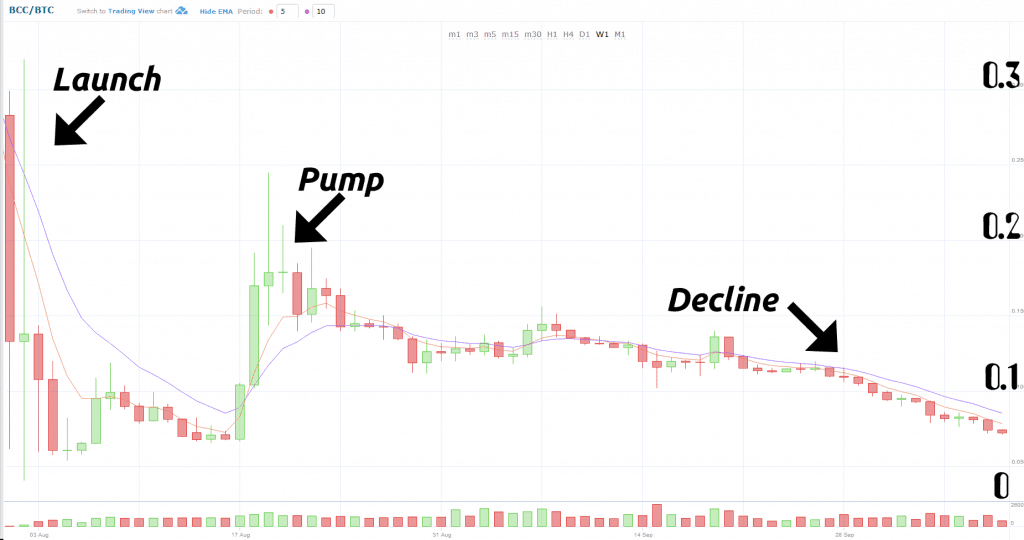
Bcash priced in Bitcoin on the HitBTC exchange, August 1 to October 9, 2017
Reasons for Optimism
The Bgold team appears to be more technically competent than Bcash’s devs. Bgold’s GitHub repository appears more active than Bcash’s , for example. Unlike Bcash’s website, Bgold’s isn’t running on Wix, the noob-friendly website builder.
Consider the technical differences among Bitcoin and the various pretenders to its crown:
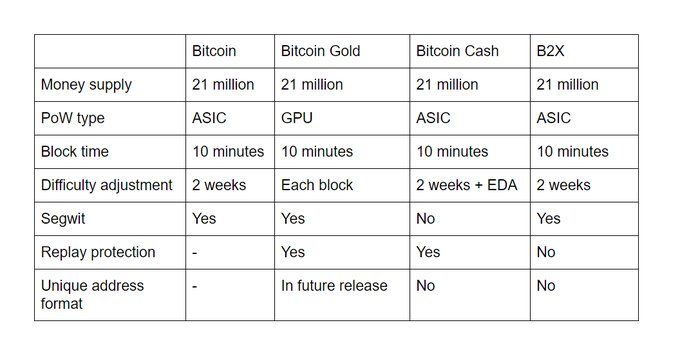
Whereas Bcash has deliberately rejected Bitcoin’s SegWit upgrade, Bgold has embraced it. Thus, Bgold may copy forthcoming Bitcoin improvements, such as Lightning Networks.
It appears that Bgold has plans to change address formatting too—a welcome change made to prevent the accidental sending of BTC to fork-coin addresses.
Further, Bcash’s Emergent Difficulty Algorithm (EDA) has produced erratic block times that are either too slow or too fast. Bgold’s per-block difficulty adjustment will likely encounter difficulties of its own.
These technical considerations lead me to believe that Bgold has a better chance at long-term sustainability than Bcash. Because of the additional attractive prospect of home mining Bitcoin, Bgold may eventually absorb much of Bcash’s value. However, as a mere clone, it seems doubtful that it’ll have much impact on Bitcoin itself.
Reasons for Pessimism
Bgold was initially announced as an ICO, although these early announcements have since been ( unsuccessfully ) scrubbed from the internet. To put it mildly, it seems that the BTG plan has undergone multiple revisions.
Serious questions remain as to whether LightningASIC and its partners will be mining BTG between the fork and exchange listing dates. This kind of midstream pre-mine would send such strong scam signals that LightningASIC would be foolish to attempt it.
Another potential problem is that Bgold and SegWit2x haven’t yet implemented replay protection. Unless this feature is added, in sending BTG, a user might inadvertently send BTC also, which could be a costly mistake.
Update: Bitgold’s site states that Replay protection is added.
Warning : avoid trading BTG (and S2X) until replay protection is in place!
Another compelling reason to be bearish on Bgold is that there’s simply no real need for it. Were BTG to launch as just another Equihash coin without the benefit of Bitcoin’s name and transactional history, it’d go largely unnoticed. The only reason Bgold is interesting is that it’ll be freely distributed to Bitcoin holders. If the majority of Bitcoin holders are hostile to it, it’ll tank.
For further cautions regarding Bitcoin Gold, check out this Reddit thread . While the thread is probably too harsh, I agree that buying Bgold is risky and best avoided.
To my mind, the only question is how much Bgold to dump and when. Holding a small percentage (maybe 5%–25%) long term, as a gamble on future upside, doesn’t seem entirely unreasonable.
Here’s my Bgold trading plan
The following is my own personal take on Bgold and should not be considered as investment advice.
While I dumped all my Bcash as soon as possible, I’ll probably adopt a more patient strategy with Bgold. With Bcash, I had the advantage of being able to sell before most other market participants. This is unlikely to be the case with Bgold. I expect a big rush to sell when it goes live.
Unless Bgold sinks without a trace upon its launch, Bcash history suggests that it’s better to wait for a later pump to sell. If a futures market develops for BTG—similar to Bitfinex’s BT1 and BT2 tokens for Bitcoin and SegWit2x —it will greatly aid the decision on how much Bgold (if any) to sell when it launches. However, it seems like most exchanges are ignoring Bgold at this time, so a futures market probably won’t appear.
In Conclusion, Here Are 3 Things to Do to Survive Any Hard Fork:
- Make sure your Bitcoins are on a wallet that you control the private key to (see a full list of wallets here). Some examples are Electreum, any hardware wallet (Ledger, Trezor, etc.), and Exodus.
- Avoid transactions shortly after the fork.
- After you get the all clear, access your new coins. At this point, you can move them to a designated wallet or sell them.
Follow Bitcoin Gold developments on the official Bitcoin Gold Twitter account.
What are your thoughts about Bitcoin Gold? I would love to hear them in the comment section below.


Комментариев нет:
Отправить комментарий